

Two cracking maiden speeches from Lib Dems

Welcome
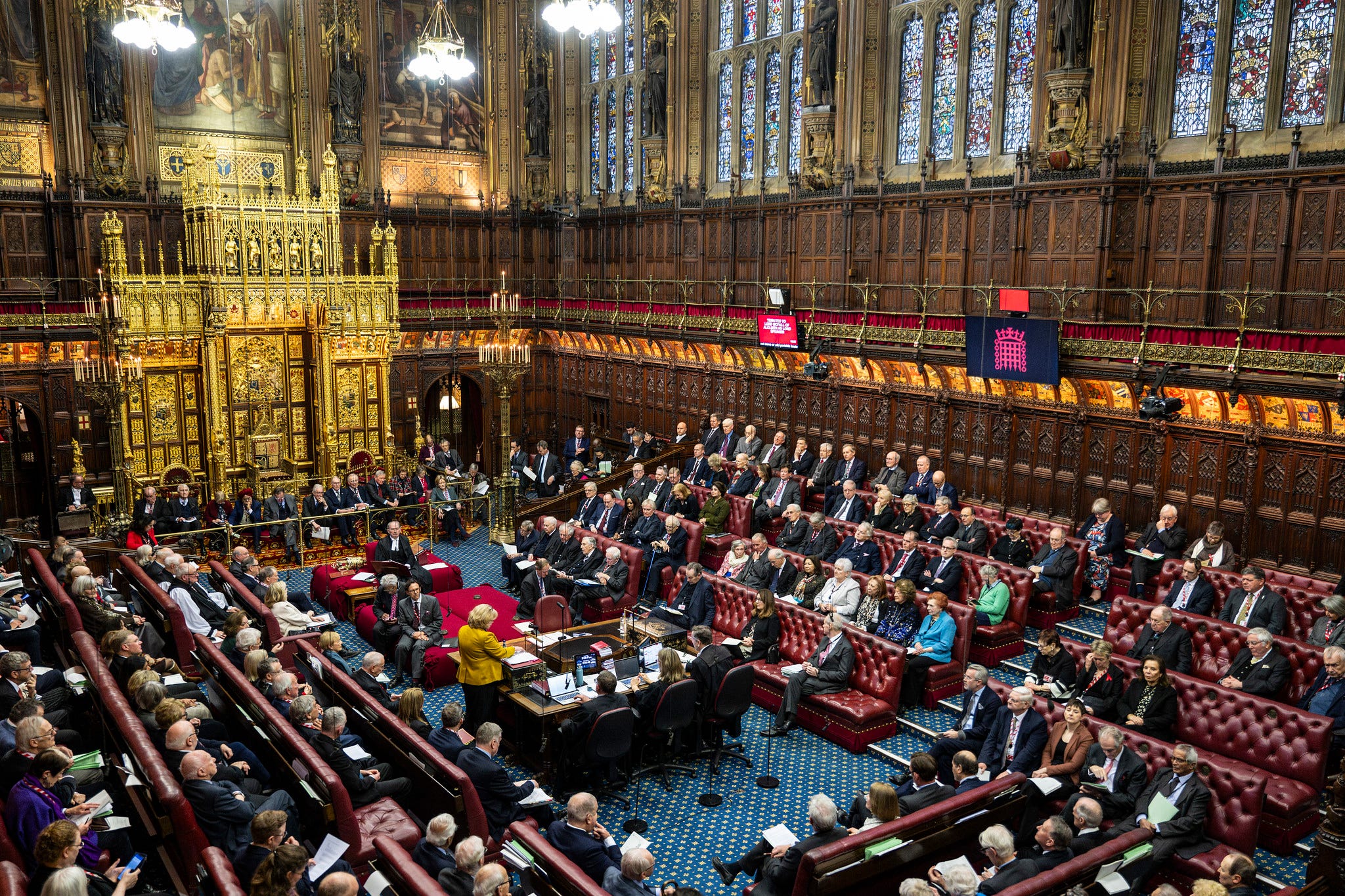
There was a treat in the House of Lords this week - two maiden speeches from Liberal Democrat peers, Rhiannon Leaman and Mike Dixon. I know many readers enjoyed Sarah Teather’s maiden speech, so here now are Rhiannon’s and Mike’s too. And even if you think you know them already, I think you’ll find much new to learn in their speeches.
Rhiannon Leaman: I think of the children whose distress is quiet
My Lords, for the past seven years, I have served as chief of staff to my right honourable friend Sir Ed Davey. While I declare this interest, I must say that it has not all been wet suits and splash parks. I am not sure that my new leader, my noble friend Lord Purvis, is up for bungee jumping between votes on College Green either.
Together with an extraordinary team of colleagues, including my noble friend Lord Dixon, whose own maiden speech I am very excited to hear later in this debate, Ed and I had the task of rebuilding our party. At the last election, the Liberal Democrats returned our largest number of MPs in a century. I say this because it matters. With populism on the rise across the world, it matters that we have a thriving liberal force in this country: one committed to holding Governments to account when they fall short, and, crucially, prepared to stand firm against those who would drag our politics and our communities to the extremes of left or right. Division and demagoguery are not inevitable, but they must be resisted, and I intend to play my part in that resistance from these Benches.
In joining this House I follow in the footsteps of many former political staffers across all Benches. I would like to acknowledge two of them in particular today: my sponsors and friends, my noble friends Lady Grender and Lady Suttie. They have been generous mentors to me over many years, providing wise counsel, encouragement, wine and, on occasion, the perfectly timed piece of rather blunt advice. While I thank them, I also thank Black Rod, our doorkeepers and attendants and staff across this House for their support and good humour in helping me find my way at this end of the Palace, as well as our wonderful team in the Liberal Democrat Whips’ Office. I would like to add my congratulations to the noble Lords, Lord Hobby and Lord Blackwater, on their maiden speeches, both of which gave a real sense of the contribution they will make to this place.
It is a huge privilege to speak in this debate on His Majesty’s gracious Speech. It certainly feels a very long way from Chipping Sodbury where, along with my brother and sister, I was raised by my lovely mum. Mum spent more than 40 years as a nurse in the NHS, promoting the health and protection of children and those who look after them. I was fortunate to be able to draw on the values mum instilled in me to support Ed Davey to tell his story of care, and to place the millions of unpaid carers across our country at the front and centre of our general election campaign to help make the case for those who form the invisible backbone of our communities - those who constitute an economy within the economy: uncosted, too often uncounted and still, overwhelmingly, women.
I am going to focus my remaining remarks on the families who are often part of that same story of care: children and young people with special educational needs and disabilities, and the parents and carers who spend months, often years, fighting for support. The SEND system is broken. That is the lived reality of families across the country. Children are failed every day. Parents are forced into exhausting battles simply to secure what their child should have been entitled to from the start. Teachers and school leaders are doing their best in a system stretched beyond capacity. Meanwhile, local authorities are being driven to the brink by costs they cannot meet.
That is why reform is urgent, and why I welcome the education for all Bill as a step in the right direction. But reform will succeed only if children and families are placed at its heart. If reform means removing rights from parents who already feel powerless, weakening routes of appeal or disrupting settled placements, it will fail. This is particularly true for neurodivergent children. Understanding of autism, ADHD and other forms of neurodiversity has grown enormously, but support has not kept pace. Too many children wait years for assessment. Too many families are told to come back when things are worse. Too many children learn far too young that school is a place where they are misunderstood.
I know this not only as a matter of policy, but as a parent. My son and daughter each waited three years for their diagnoses. In my daughter’s case, I am not sure she would have been referred at all had it not been for one teacher, Miss Holmes. She saw my daughter clearly when the systems around her did not, and advocated for her when she could not yet advocate for herself. But I think of the children who do not have a Miss Holmes: the children whose distress is quiet; the girls who mask until they break; the young people whose underlying neurodivergence is missed, as my own was.
The challenges within the SEND system are complex and fixing them will not be cost-free, but failure is not cost-free either. We pay for delay in crisis placements, parental exhaustion, children’s mental health and lost potential. I look forward to working with colleagues across this House, of all parties and none, to make the case for children who cannot wait, for the families who should not have to fight, and for a country that is at its best when it sees, hears and values every child.
Mike Dixon: the best decisions come from truly understanding what matters to people
My Lords, I am grateful for the opportunity to make my maiden speech during this debate. It is an honour to follow the noble Lords, Lord Hobby and Lord Blackwater. I am not sure whether protocol also requires me to congratulate the noble Baroness, Lady Debbonaire, on the delayed moments of her earlier speech, as she did part of her maiden speech today.
Making sure that people have a fair chance in life has been the core of my work: at Victim Support, in government, at Citizens Advice, and at the drug, alcohol and mental health charity I was privileged to lead with the support of my noble friend Lord Carlile as chair of trustees.
I want to start my speech today by congratulating another noble friend, my noble friend Lady Leaman, on her maiden speech. There are few people with deeper and truer instincts about what is right and what is wrong, and with the courage to say so. It is good to see her step into the light.
I want to thank all noble Lords for their welcome here. This is a daunting place, and the warmth I have experienced from right across the House has been quite something. To all of those who have smiled, inquired or pulled me on to the Benches when I was sitting in the wrong place: thank you. This is a culture that is fragile; it is a hard and rare and precious thing, and I will do my very best to sustain it and foster it. I want to add my thanks to the staff team here: the doorkeepers, the attendants, the clerks and the wider teams right across the estate. They are always reasonable and always kind, and there is often a twinkle in the eyes.
I want to thank my supporters: my noble friend Lady Grender, who has been both impish and wise counsel to me, as only a true friend can be, as she has been for the past six years; and my noble friend Lord Purvis of Tweed, sat here in front of me, who has been a kind and astute interpreter of this place, its customs, its history and particularly its architecture. If anyone ever wants to ask a question on that, I highly recommend his advice. Of course, I thank the staff in our Whips’ Office, who have guided me through this strangest of experiences with care, expertise and real attention. Most of all, I thank my mum, who brought me up by herself, in Jericho in Oxford - not the other Jericho - to believe you should be kind and that you should try.
Before I move to the matter of the gracious Speech, I need to declare an interest as the current chief executive of the Liberal Democrats.
I have always believed that the best policy, the best legislation and the best decisions come from truly understanding what matters to people, and what people actually do. That sounds obvious, but in my experience in lots of organisations it is all too rare. It is so easy to make assumptions from our own lives about how people will respond, and so easy to miss the nuances in what people say. One of the things I have most valued about the debate today has been the care and attention with which people have both listened to what others have said and tried to hear the meaning and motivation behind the words. It can be hard to get the words right, but the meaning and the motivation have been approached today in a spirit of generosity.
Since January, volunteers across the Liberal Democrats have held more than a million conversations with people across England, Scotland and Wales, asking them what matters in their lives. I mention this not because it lies behind my party’s success. Volunteers in other parties have also worked hard, but sadly that data on how hard they have worked is less accessible to me than I would like it to be. I mention it because I truly believe that that is how politics should work: by starting with, listening to and serving people as you find them.
A decade ago, I was at Citizens Advice, and the website there was written in very precise and technical language that got the law absolutely right and was completely impossible for most people to understand. With a brilliant team, including many people who worked on the prototype of GOV.UK with the noble Lord, Lord Maude, we took it from being used by 4 million people a year to 38 million people a year. That one change has probably helped more people than anything else I have done in my entire life. We did that by listening to the language people used, understanding the way people approached problems in their own lives, and designing our tools and giving our advice in a way that was simple and clear. If government needed to bend to how people thought about a problem, we made sure that it did so.
I have also spent countless hours in drug and alcohol services, where one simple change we made had a huge impact. The regulations used to require charities such as mine to ask an astonishing number of, frankly, pretty impertinent questions to people who had just walked through the door of a drug and alcohol service, which is one of the hardest things to do in life. Too many people would never come back, and our country has lost too many people as a result of the way it was regulated. Our front-line workers did not feel they had permission to do what they knew was right; but we backed them, and they proved the obvious, which is that, if you make people feel welcome and show them they are safe and that you care, they will come back, and you can ask the questions later. I am pleased that, some years ago, the regulator followed our lead and changed its requirements, so more people now get help and more people are alive because of that regulatory change.
In this Session, we will debate in Bills on modernising how citizens interact with public services and how we use technology to do so. I hope the examples I have given today give a sense of what I want to bring to this House in discussions with all noble Lords: a curiosity and a focus on what actually matters in people’s lives; the importance of emotion and dignity in our decision-making, as my noble friend Lady Leaman said in her speech; the opportunities technology provides if we start with people and put them before machines; and the need for public services to serve people as they are, not as we may assume them to be. As I start my work in this House, I look forward to many conversations on these issues, and to working with - and, in particular, learning from - as many people across the Chamber as I can.
In other news from the Lords…
In case you missed previously…


Elsewhere from me…

Thank you
I hope you enjoyed reading this, and if you did please do encourage others to take a read too:
Best wishes,
Mark